Cross Orbweaver Bite: Symptoms, Danger & Treatment (2026)
Does a cross orbweaver bite actually hurt? Most people barely feel it — a quick pinch, a small red mark, and it's over within a day or two. This spider looks big and dramatic sitting in the middle of its web, but the bite behind that reputation is one of the mildest in the spider world.

Is it dangerous?
The overwhelming majority of cross orbweaver bites resolve entirely on their own within a few days, leaving nothing behind but a faded red mark. The venom is built to subdue small flying insects, not mammals, so even a direct bite delivers a dose far too small to cause systemic harm to a healthy adult.
The one genuine complication people search for is an allergic reaction — nausea, dizziness, or a wider rash beyond the bite site. That reaction is extremely rare, and even when it occurs it tends to be uncomfortable rather than dangerous. No documented fatalities are attached to this species, which puts it in a very different risk category than medically significant spiders like black widows or brown recluses.
Children, people with known insect-venom allergies, and anyone who has had a strong reaction to a spider or insect bite before are the ones most likely to notice a bigger response. For most other people, the reaction stays local — redness, mild swelling, maybe some itching — and never spreads beyond the immediate area.
Bottom line: monitor the bite for the first 24 to 48 hours. If it's fading rather than growing, you're on the expected track. If pain, swelling, or redness is still increasing after two days, or you develop fever, vomiting, or facial swelling, that's the point to call a doctor rather than keep waiting.
Should You See a Doctor?
A short decision tree based on CDC and Mayo Clinic guidance.
1 / 3 Is there swelling of the face, lips, tongue, or throat, or any difficulty breathing or swallowing?
2 / 3 Have you developed fever, vomiting, notable weakness, or redness that spread rapidly within hours?
3 / 3 Has the area been getting steadily worse for more than 48 hours, or does it look infected (warmth, pus, red streaking)?
What the cross orbweaver bite looks like
Most people feel a brief pinch or a mild sting the moment it happens — comparable to a light bee sting rather than a sharp, searing pain. Some bites barely break the skin at all, and the person doesn't realize they've been bitten until a small mark appears later.
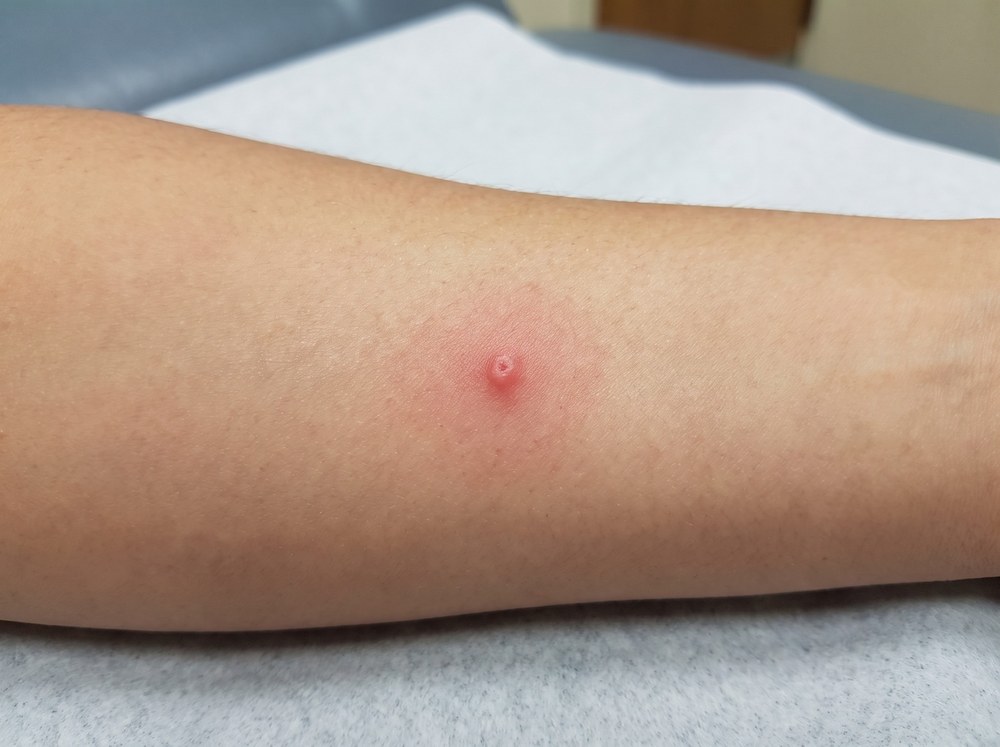
In the first couple of hours, expect a small red bump or pinprick, sometimes with a faint halo of mild swelling around it. There's no bull's-eye pattern, no blister, and no open sore associated with this species — those signs point to a different cause entirely. If you want a second opinion from a phone camera, the BugKnow app to identify a cross orbweaver spider works directly from a live photo of the spider itself, not just the mark.
Because the mark so closely resembles a mosquito bite, misidentification is common. People frequently assume a random itchy welt came from a mosquito, flea, or unknown insect when it was actually a brief, unnoticed spider encounter near a web strung across a doorway, porch, or garden path.
The spider itself is the more reliable identifier than the wound. Look for a pale, cross-shaped marking made of white dots and dashes across a rounded, variably colored abdomen — that pattern is the single most consistent clue, since body color can range from pale yellow to nearly black.
Wondering how serious your bite actually is?
Run the Symptom CheckerSymptom timeline
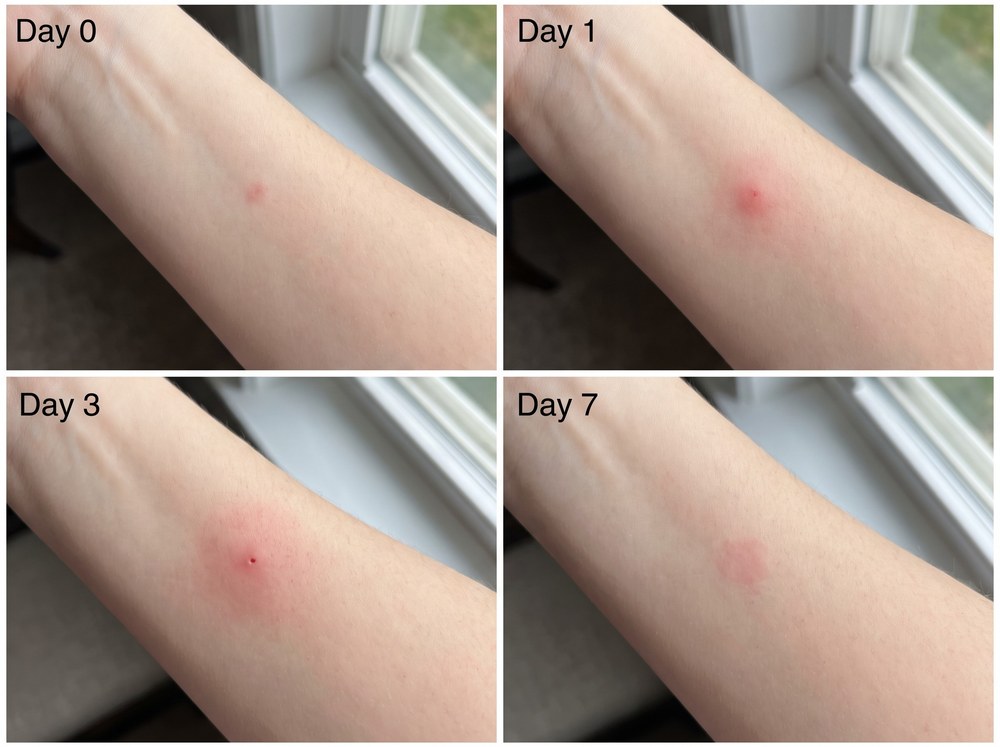
Hours 0–2. A brief pinch or sting, then a small red mark or pinprick appears. Mild swelling and light itching may start to build around the site.
Hours 2–8. Redness and any swelling typically peak in this window. Itching can feel most noticeable here, but the area should stay contained to roughly the size of a coin.
Day 1–2. Redness and swelling usually begin fading noticeably. Tenderness eases and the mark starts looking like a healing mosquito bite rather than anything fresh.
Day 3–7. Most bites are fully resolved by this point with no scarring. If the bite is still worsening, still spreading, or new symptoms like fever or nausea have shown up by day 3, that's outside the expected pattern and worth a medical evaluation rather than more waiting.
Bite Symptom Checker
Check every symptom you're currently experiencing. Get a plain-English risk read.
Treatment
Wash and elevate. Clean the bite gently with soap and water. If it's on an arm or leg, elevating the limb for a while can help limit swelling.
Cool, don't heat. A cool, cloth-wrapped compress applied for 10 to 20 minutes eases pain and swelling. Skip the heat — it can make local inflammation worse rather than better.
OTC support. An over-the-counter pain reliever or antihistamine handles most of the discomfort, and a topical anti-itch cream helps if the area itches while it heals. If you're not fully sure what bit you, a household insect identifier can help rule out other biting insects before you settle on a treatment plan.
Watch, don't wrap. Leave the area uncovered so you can see how it's changing. Trace the border of any redness with a pen — if that line is still expanding after 48 hours, or the site starts looking infected, that's your trigger to call a doctor.
Wondering whether to head to urgent care?
Take the Doctor Decision TreePrevention
Cross orbweavers build a new web every day, often anchored between porch posts, eaves, garden plants, and outdoor lighting where flying insects gather. Most bites happen when someone accidentally walks into a web or grabs the spider without seeing it, so checking doorways, chairs, and garden paths before pushing through works better than any spray.
Wearing gloves while gardening near shrubs and structures, and gently brushing webs aside with a stick rather than your hand, cuts down on accidental contact. These spiders are shy and beneficial insect predators, so most homeowners choose to relocate rather than eliminate individual spiders they find.
If you've spotted more than one in your home rather than outdoors, a full inspection is warranted to find where they're getting in.
Which Bug Bit Me?
Not sure it was a cross orbweaver? Answer three questions and we'll narrow the list.
For a deeper look at markings and range beyond this quiz, the illustrated cross orbweaver species profile on Insectio lays out more comparison photos side by side.
Frequently asked questions
Can a cross orbweaver bite kill you?
No documented fatalities are linked to cross orbweaver bites. These spiders carry venom, but it is formulated to subdue small insects, not mammals, and even a full bite delivers a tiny dose. The most likely outcomes are brief pain, redness, and mild swelling similar to a bee sting. Death from an orbweaver bite has not been reported in trusted spider-bite literature, and the rare allergic reaction involves nausea or dizziness rather than a life-threatening event.
How long until I know if my cross orbweaver bite is serious?
Most reactions peak within the first 8 hours and noticeably fade within 1 to 2 days. If redness is still spreading, pain is worsening, or new symptoms like fever or nausea appear after the first day, that is a signal to escalate rather than wait. A cross orbweaver bite that is going to resolve on its own almost always shows clear improvement by day 2 or 3, not new symptoms.
How do I tell a cross orbweaver bite from a black and yellow garden spider bite?
The bite marks themselves look nearly identical, a small red spot with mild swelling. The real clue is the spider, not the wound. Cross orbweavers have a pale cross-shaped marking on a rounded, variably colored abdomen, while black and yellow garden spiders (Argiope aurantia) are much larger with bold yellow-and-black stripes and a zigzag stabilimentum in the web. Both bites are low-risk and treated the same way.
Does a cross orbweaver bite hurt?
Most people describe it as a brief pinch or a mild sting, comparable to a mosquito or light bee sting, rather than sharp pain. Some bites barely break the skin and go unnoticed until a small welt appears. A minority of people report more noticeable stinging or tenderness in the following hour, but severe or lasting pain is not typical for this species.
What does a cross orbweaver bite look like?
Expect a small red bump or pinprick mark, sometimes with mild surrounding swelling and a faint halo of redness. There is no bull's-eye pattern, blister, or open sore associated with this species. Most marks resemble a mosquito bite and fade within a few days without leaving a scar. If you notice a bull's-eye rash or a spreading dark ulcer, a different cause should be considered.
Are cross orbweaver spiders aggressive?
No. Cross orbweavers are shy and would rather flee or drop from their web than confront a person. They typically bite only when grabbed, squeezed, or trapped against skin with no way to escape. Web-sitting behavior means most human contact happens accidentally, such as walking through a web strung across a porch or garden path, not from the spider seeking out a person to bite.
Why do some cross orbweaver bites feel worse than others?
Reaction severity depends more on individual sensitivity than on the spider itself. University of Washington horticulture guidance notes that some people are more sensitive to orbweaver bites than others, which is why identical bites can produce very different reactions in different people. Skin thickness, immune response, and how much venom was actually delivered all play a role. This variability is normal and does not by itself indicate a dangerous bite.
When should I see a doctor for a cross orbweaver bite?
See a doctor if pain or swelling becomes severe, redness keeps expanding after 24 to 48 hours, the site looks infected (warmth, pus, red streaking), or you develop vomiting, weakness, facial swelling, or trouble breathing. These signs go beyond the mild, self-limited reaction typical of this species and warrant a same-day evaluation rather than continued home monitoring.
Take 30 seconds to check your bite now.
Start the Symptom Checker

